
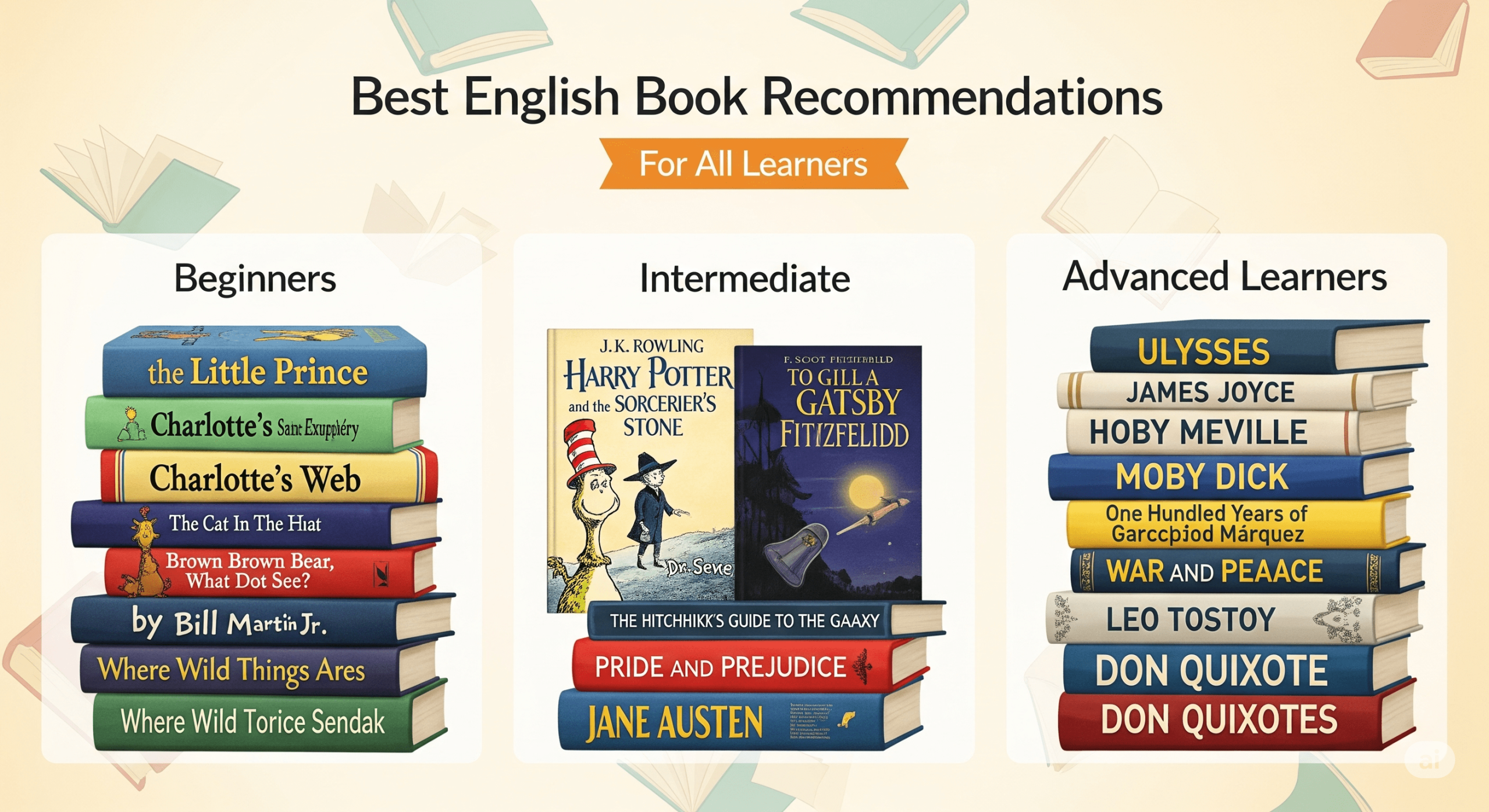
Beginner Level: Simple, Fun, and Engaging
1. “The Very Hungry Caterpillar” by Eric Carle
-
Why it’s good: Simple sentences, repetitive structure, colorful illustrations.
-
Tips: Read aloud, follow the story with pictures, and note 3–5 new words per reading.
2. “Charlotte’s Web” by E. B. White
-
Why it’s good: Short chapters, familiar storylines, conversational English.
-
Tips: Focus on dialogues to understand natural speech patterns. Highlight key verbs and adjectives.
3. “Flat Stanley” by Jeff Brown
-
Why it’s good: Fun plot, simple narrative, and cultural references.
-
Tips: Try summarizing each chapter in one sentence.
Beginner Reading Strategy:
-
Read 1–2 pages per day.
-
Use a graded dictionary for unknown words.
-
Keep a personal vocabulary journal (3–5 words per day).
Intermediate Level: Building Vocabulary and Comprehension
1. “The Giver” by Lois Lowry
-
Why it’s good: Short chapters, slightly more advanced vocabulary, thought-provoking story.
-
Tips: Focus on descriptive words and main ideas. Write a 2–3 sentence summary after each chapter.
2. “Charlotte’s Web” (Re-read for detail)
-
Re-reading at a slightly faster pace can help notice new vocabulary and grammar patterns you missed before.
3. “Harry Potter and the Sorcerer’s Stone” by J.K. Rowling
-
Why it’s good: Engaging plot, everyday vocabulary with some advanced words.
-
Tips: Guess unfamiliar words from context first. Highlight 5–10 words per chapter.
Intermediate Reading Strategy:
-
Mix extensive reading (finish a story for flow) and intensive reading (analyze short passages for new vocabulary).
-
Practice timed reading: see how many pages you can read in 15–20 minutes without losing comprehension.
Advanced Level: Challenging, Rewarding, and Varied
1. “1984” by George Orwell
-
Why it’s good: Complex sentences, rich vocabulary, political and cultural context.
-
Tips: Focus on main ideas first, then re-read paragraphs to understand nuances. Take notes on themes and key phrases.
2. “Pride and Prejudice” by Jane Austen
-
Why it’s good: Classical English, dialogues, advanced idiomatic expressions.
-
Tips: Pay attention to formal structures and character dialogues. Write a short summary for each chapter to retain context.
3. “To Kill a Mockingbird” by Harper Lee
-
Why it’s good: Realistic dialogues, descriptive language, cultural insights.
-
Tips: Note phrases and idioms. Practice using them in your own sentences.
Advanced Reading Strategy:
-
Focus on reading for style and ideas.
-
Try shadow reading: read aloud while following the text to improve fluency.
-
Combine reading with writing: summarize chapters, write opinions, or retell the story.
Tips to Maximize Learning from Books
1. Don’t Stop for Every Word
-
Guess from context first.
-
Only note words essential to understanding.
2. Keep a Vocabulary Notebook
-
Include: word, part of speech, example sentence, personal sentence.
-
Review weekly.
3. Mix Genres
-
Fiction, nonfiction, biographies, science articles, and travel stories.
-
Exposure to varied styles improves comprehension and vocabulary range.
4. Set Small, Achievable Goals
-
Beginner: 1–2 pages/day
-
Intermediate: 1 chapter/day
-
Advanced: 20–30 minutes/day of intensive reading
5. Summarize
-
Retell the story in English.
-
Helps internalize grammar structures and vocabulary.
Mini Reading Exercise Example (Intermediate)
Excerpt from “The Giver”:
“Jonas had never felt anything like this before. He felt exhilaration and fear, excitement and wonder.”
Exercise:
-
Highlight emotions: exhilaration, fear, excitement, wonder
-
Try writing your own sentence with 2–3 of these words.
-
Explain the main idea in one sentence: Jonas is experiencing a mix of strong emotions.
Recommended Reading Routine
| Level | Time | Focus |
|---|---|---|
| Beginner | 10–15 min/day | Vocabulary, simple sentence patterns |
| Intermediate | 20–30 min/day | Comprehension, context guessing, summaries |
| Advanced | 30–45 min/day | Style, idioms, critical thinking, detailed notes |