
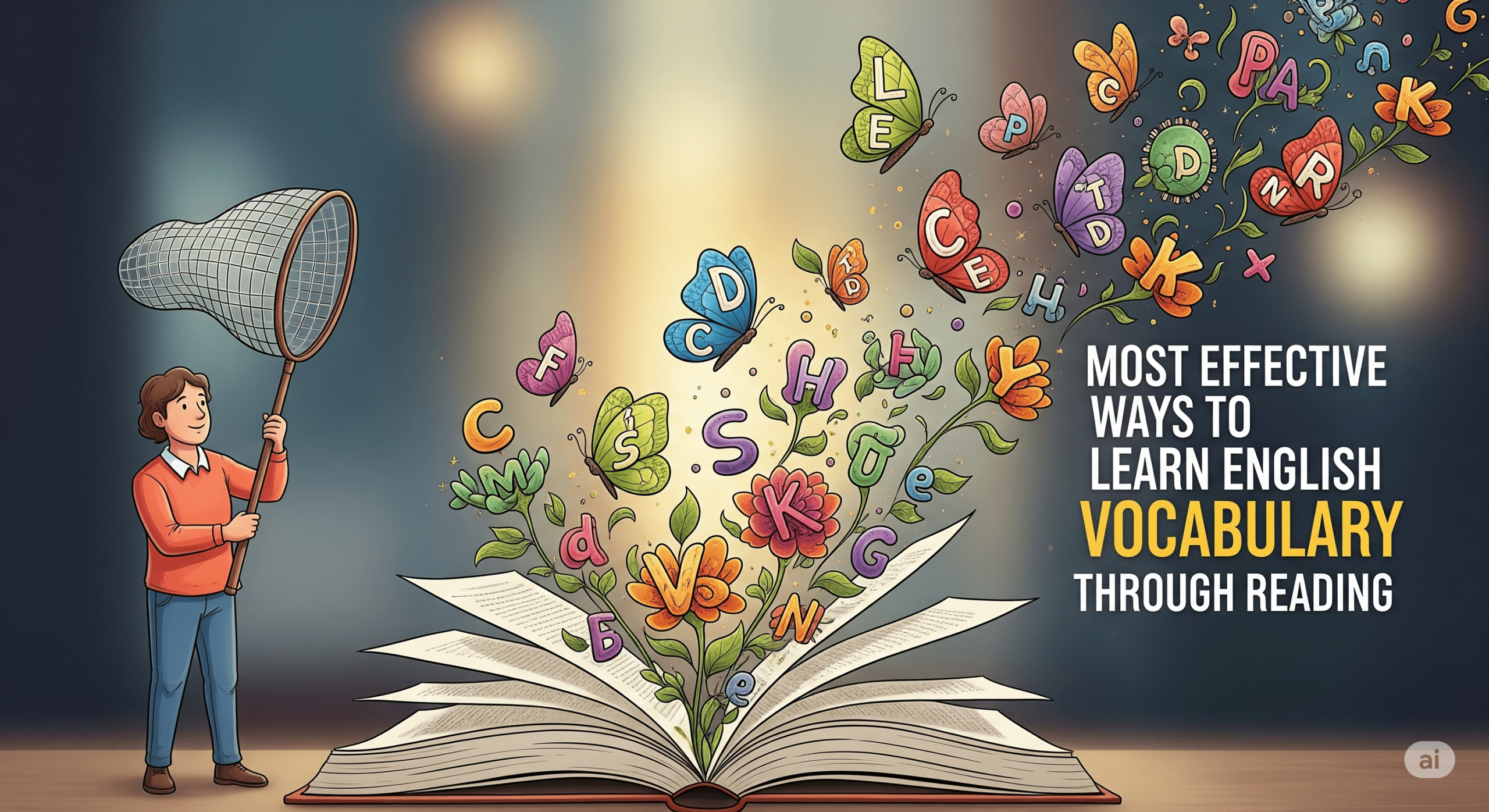
Why Reading is Effective for Vocabulary Learning
Reading is an excellent tool for learning vocabulary because it:
-
Provides Context: Words are presented in sentences, showing how they are used naturally.
-
Introduces Repetition: Frequent encounters with words help reinforce memory.
-
Supports Meaning Inference: Learners can guess the meaning of unknown words using context clues.
-
Connects Reading to Speaking and Writing: Exposure to vocabulary improves overall language use.
-
Engages the Brain: Active reading strengthens retention better than passive memorization.
Step 1: Choose the Right Material
Selecting material that matches your level and interests is essential:
-
Beginners: Graded readers, children’s books, and simple short stories.
-
Intermediate: News articles, blogs, and short novels.
-
Advanced: Essays, professional articles, novels, and academic texts.
📌 Tip: Pick topics you enjoy, such as travel, technology, or food, to stay motivated.
Step 2: Read Actively
Active reading helps learners notice and retain new vocabulary:
-
Highlight or underline unfamiliar words.
-
Write notes about meanings and usage.
-
Look for patterns: Prefixes, suffixes, or word families.
-
Ask questions: How is this word used? Could I use it in my own sentences?
Active engagement improves comprehension and makes vocabulary learning more effective.
Step 3: Use Context Clues
When encountering a new word:
-
Examine surrounding words for hints about meaning.
-
Identify signal words (because, although, however) to understand relationships.
-
Make an educated guess before checking a dictionary.
This approach trains your brain to understand words naturally and speeds up reading.
Step 4: Keep a Vocabulary Journal
A vocabulary journal is a practical tool for retention:
-
Write the new word, its definition, and an example sentence.
-
Add a sentence of your own using the word.
-
Review the journal regularly to reinforce memory.
📌 Tip: Use digital apps like Anki or Quizlet for spaced repetition.
Step 5: Practice Repetition
Repeated exposure is key to learning new vocabulary:
-
Encounter words in multiple texts over time.
-
Revisit highlighted words from previous readings.
-
Incorporate new words into speaking and writing exercises.
Repetition strengthens memory and encourages active usage.
Step 6: Use Technology and Tools
Several tools make vocabulary learning through reading easier:
-
Read Mini: Short passages with built-in comprehension questions.
-
LingQ: Tracks new words and allows you to learn vocabulary in context.
-
News in Levels: Provides simplified articles suitable for learners.
-
Goodreads: Helps you track reading and discover new material.
Using technology adds structure and engagement to the learning process.
Step 7: Read Regularly
Consistency is crucial:
-
Read daily, even if only for 10–20 minutes.
-
Short, frequent sessions are more effective than infrequent long sessions.
-
Gradually increase reading length and complexity over time.
Daily reading ensures consistent exposure to new vocabulary.
Step 8: Combine Reading with Other Skills
To reinforce vocabulary learning:
-
Listening: Follow along with audiobooks to hear pronunciation and rhythm.
-
Writing: Use new words in sentences, essays, or reflections.
-
Speaking: Discuss articles or stories using the new words.
This integrated approach strengthens retention and fluency.
Step 9: Focus on Useful Vocabulary
Not all words are equally important. Prioritize:
-
High-frequency words – words you will encounter often.
-
Topic-specific words – words relevant to your interests or career.
-
Phrases and collocations – learning words in chunks improves natural usage.
By focusing on practical vocabulary, you can maximize learning efficiency.
Step 10: Be Patient and Stay Motivated
Learning vocabulary takes time and repetition:
-
Don’t expect to remember every new word immediately.
-
Celebrate small milestones, like learning 5–10 words per reading session.
-
Mix genres and formats to keep the process enjoyable.
Consistency and motivation are key to long-term success.
Recommended Reading Material for Vocabulary Learning
-
Beginners: Graded readers, children’s short stories, simplified news.
-
Intermediate: Blogs, online magazines, short novels.
-
Advanced: Professional articles, classic literature, academic essays.
Mixing material ensures exposure to diverse vocabulary and keeps reading interesting.