
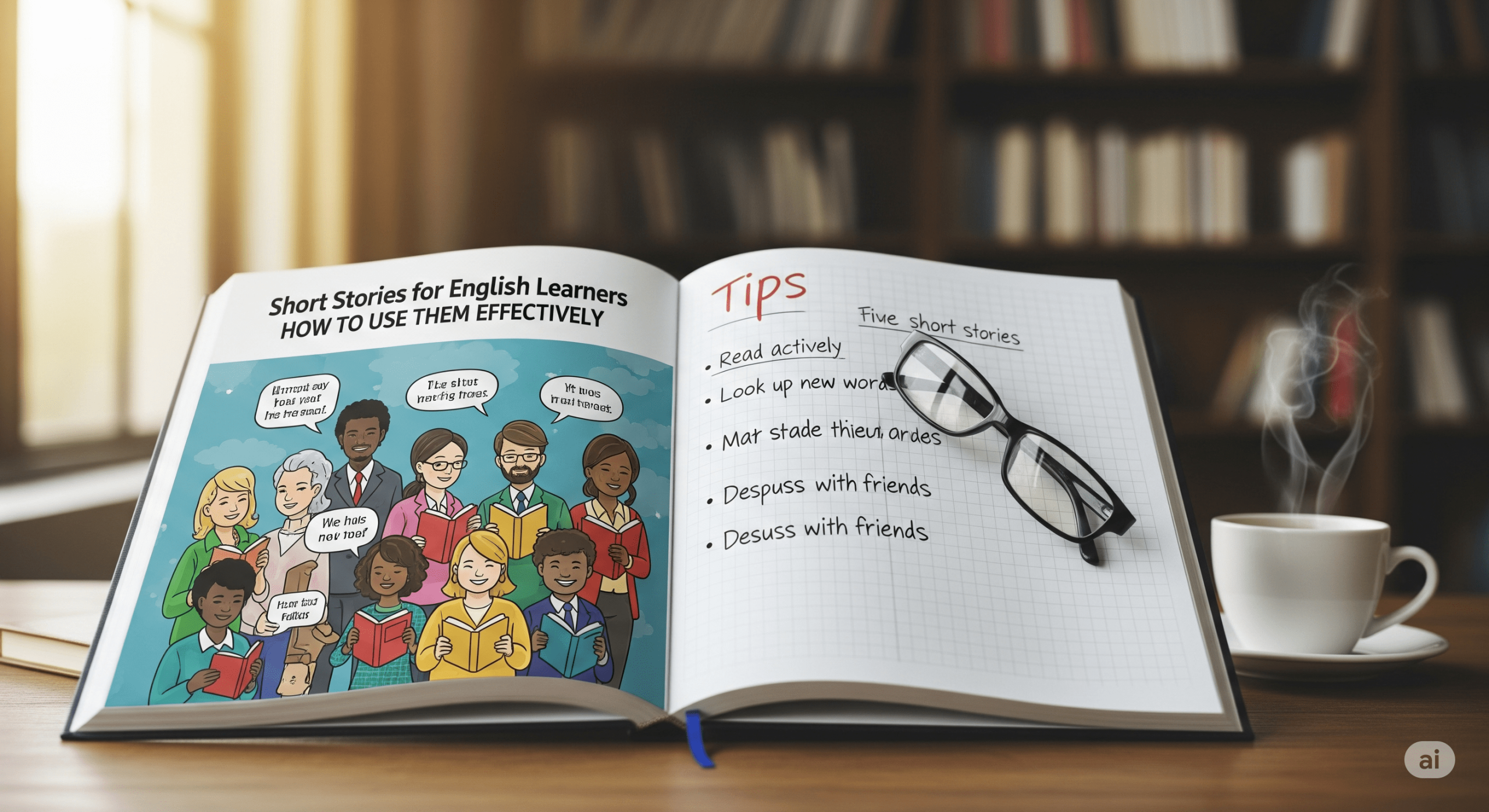
Why Short Stories Work for Learning English
-
Manageable length
-
Short stories are usually 500–3,000 words. You can read an entire story in one session.
-
Completing a story provides a sense of achievement and motivation.
-
Focused vocabulary and grammar
-
Each story typically revolves around a single setting or theme, so vocabulary is concentrated and easier to remember.
-
Grammar structures are often repeated naturally.
-
Contextual learning
-
Words and expressions appear in meaningful contexts, which improves retention.
-
Cultural insights
-
Short stories often reflect culture, social norms, or moral lessons, giving learners extra exposure to English beyond language.
How to Use Short Stories Effectively
Step 1: Choose the Right Level
-
Beginner: simple sentences, everyday vocabulary, familiar topics.
-
Intermediate: slightly longer stories, more varied vocabulary, some figurative language.
-
Advanced: literary short stories with complex grammar, idiomatic expressions, and cultural references.
Tip: Use graded readers or websites that label story levels.
Step 2: Pre-Reading Preparation
-
Look at the title and cover illustration. Predict the theme.
-
Quickly scan headings or paragraph beginnings.
-
Note 3–5 words you might encounter frequently (optional).
Step 3: Active Reading
-
Read the story once for general understanding.
-
Highlight keywords, new expressions, and important details.
-
Avoid stopping for every unknown word—guess from context first.
Step 4: Post-Reading Exercises
1. Summarize the Story
-
Write a 3–5 sentence summary in English.
-
Helps consolidate comprehension and practice writing.
2. Vocabulary Notebook
-
Note down new words with their meaning and an example sentence.
-
Review weekly.
3. Discussion Questions
-
Who was your favorite character? Why?
-
What problem did the characters face?
-
How would you end the story differently?
4. Retelling Exercise
-
Close the story and retell it aloud or in writing.
-
Improves fluency and memory retention.
Recommended Short Stories
Beginner Level
-
“The Lion and the Mouse” (Aesop’s Fables)
-
Simple structure, clear moral, repetitive vocabulary.
-
“The Greedy Dog” (Classic Fables)
-
Short and entertaining, useful for learning action verbs and adjectives.
-
“The Little Red Hen”
-
Easy narrative, helps learners understand sequencing words (first, next, finally).
Intermediate Level
-
“The Gift of the Magi” by O. Henry
-
Slightly more advanced vocabulary, story with an emotional twist.
-
“The Necklace” by Guy de Maupassant
-
Richer language, introduces idiomatic expressions and descriptive sentences.
-
“Thank You, Ma’am” by Langston Hughes
-
Conversational style, useful for dialogue comprehension.
Advanced Level
-
“The Tell-Tale Heart” by Edgar Allan Poe
-
Complex sentences, suspenseful style, figurative language.
-
“A Piece of Yellow Soap” by Frank Sargeson
-
Realistic dialogue, cultural context, nuanced storytelling.
-
“Harrison Bergeron” by Kurt Vonnegut
-
Thought-provoking themes, advanced vocabulary, multiple levels of interpretation.
Tips for Maximum Learning
-
Mix extensive and intensive reading
-
Extensive: read multiple stories for fluency.
-
Intensive: study one story in depth, analyze vocabulary and grammar.
-
Read aloud
-
Helps with pronunciation and fluency.
-
Use graded questions
-
After reading, answer comprehension questions to reinforce understanding.
-
Repeat stories
-
Re-reading improves vocabulary retention and strengthens comprehension.
Mini Exercise Example (Intermediate)
Excerpt from “The Gift of the Magi”:
“She had a habit of looking at the window and imagining what the world outside would be like if she could only see it more clearly.”
Exercise:
-
Highlight descriptive words: habit, imagining, clearly.
-
Paraphrase the sentence in your own words.
-
Predict what might happen next.
Recommended Reading Routine
| Level | Time | Focus |
|---|---|---|
| Beginner | 10–15 min/day | Vocabulary, sequencing, comprehension |
| Intermediate | 20–30 min/day | Dialogue, context guessing, summaries |
| Advanced | 30–45 min/day | Figurative language, themes, critical thinking |