
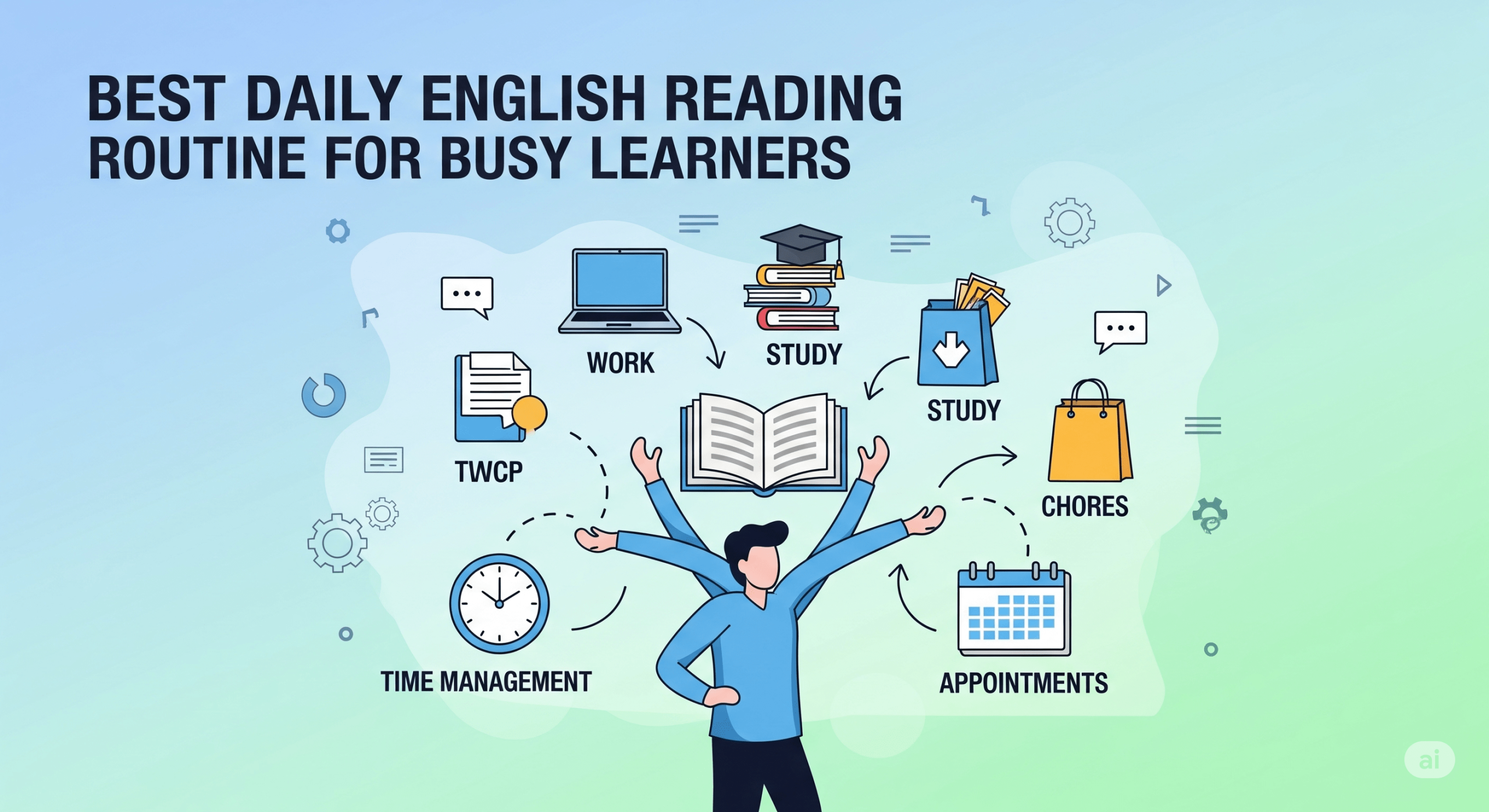
Why a Daily Reading Routine Matters
Consistency is more important than the length of each session. Reading every day helps you:
-
Internalize Vocabulary – Regular exposure to new words ensures they stick in your memory.
-
Improve Comprehension – Daily practice trains your brain to understand English without constant translation.
-
Increase Fluency – Short, frequent reading sessions are more effective than occasional long ones.
-
Build Confidence – Completing a daily reading task gives a sense of achievement, motivating you to continue.
Even 10–20 minutes daily is enough to see measurable progress over time.
Step 1: Set Realistic Goals
The first step is to define what you want to achieve:
-
Vocabulary Improvement: Focus on articles, stories, or blogs with new words.
-
Fluency and Speed: Read short passages quickly without worrying about every word.
-
Exam Preparation: Use texts similar to IELTS, TOEFL, or other language tests.
📌 Tip: Break larger goals into smaller, manageable milestones, e.g., “Read 1 article per day” or “Learn 5 new words daily.”
Step 2: Choose the Right Reading Material
Select content based on your level and interests:
-
Beginners: Graded readers, children’s books, simplified short stories.
-
Intermediate: Blog posts, news articles, short novels.
-
Advanced: Academic essays, novels, professional articles.
Focus on topics you enjoy—motivation is critical. For busy learners, short texts (5–10 minutes long) are ideal to maintain consistency.
Step 3: Create a Daily Schedule
Consistency comes from habit. Build a routine that works with your lifestyle:
-
Morning: Read one short article or a few pages of a book with your coffee.
-
Commute: Listen to audiobooks while following the text.
-
Lunch Break: Read a blog post or short story.
-
Evening: Review vocabulary and summarize what you read.
📌 Pro Tip: Attach reading to an existing habit—this is called “habit stacking.” For example, read while drinking your morning coffee or before bedtime.
Step 4: Use Active Reading Techniques
Passive reading is less effective. Engage with the text actively:
-
Highlight new words or expressions.
-
Take notes about main ideas and details.
-
Ask yourself comprehension questions: Who? What? Where? Why?
-
Summarize each paragraph in your own words.
Active reading improves retention and understanding, making your daily reading more productive.
Step 5: Combine Reading with Other Skills
Reading can be enhanced by incorporating listening, writing, and speaking:
-
Listening: Use audiobooks or podcasts alongside the text to improve pronunciation and comprehension.
-
Writing: Write summaries, reflections, or alternative endings for stories.
-
Speaking: Discuss what you read with a friend, teacher, or language partner.
This integrated approach strengthens all four language skills simultaneously.
Step 6: Track Your Progress
Monitoring progress keeps you motivated:
-
Maintain a reading journal or use a digital tracker.
-
Record the number of pages, words, or articles read each day.
-
Note down new vocabulary and review it weekly.
📌 Tip: Seeing your progress visually, such as a calendar streak, encourages consistency.
Step 7: Manage Time Effectively
Even busy learners can read daily by using short time blocks:
-
10–15 minutes during breaks.
-
5–10 minutes before sleeping.
-
Combine reading with commuting (audiobooks with texts).
Remember, consistency beats intensity. It’s better to read 15 minutes daily than 2 hours once a week.
Step 8: Stay Motivated
Keeping motivation high is key to maintaining a routine:
-
Reward yourself after completing a week of daily reading.
-
Mix genres to avoid boredom (news, fiction, blogs, comics).
-
Set small goals and celebrate milestones (finishing a story or learning new vocabulary).
Motivation combined with habit ensures long-term success.
Recommended Tools for Busy Learners
-
Read Mini – Short English passages with comprehension questions.
-
LingQ – Vocabulary and reading in context.
-
News in Levels – Simplified news articles for learners.
-
Goodreads – Track reading progress and find book recommendations.
These tools make it easier to maintain a daily reading habit.